The Overengineering Problem
Every few years, a summer sales organization decides it's going to get serious about technology. They implement a CRM. They build an onboarding LMS. They add a rep reporting app, a scheduling tool, and a leaderboard dashboard. By June, reps have five apps they're supposed to use and use exactly zero of them consistently.
The technology adoption problem in direct sales isn't about the tools — it's about the friction. A summer sales rep is 21 years old, knocking doors in 90-degree heat, and thinking about their commission check. They will use exactly the tools that are on their phone, take under 10 seconds to operate, and have an obvious personal benefit. Everything else is dead weight that leadership bought and reps ignore.
The Lean Stack That Gets Adopted
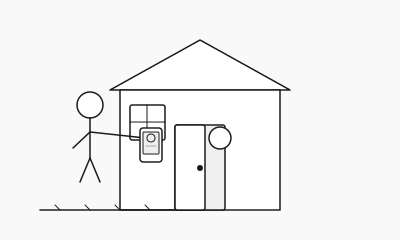
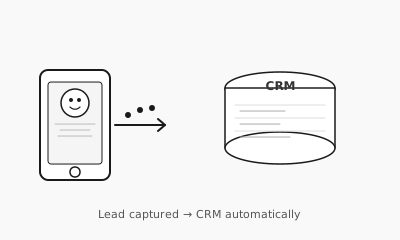
Layer 1 — Contact capture and sharing: LeaderLeads. Every rep has a card. Every homeowner they meet can get their info instantly with no app required. Every contact that engages goes into a team roster automatically. This layer has the highest personal benefit for the rep — a professional card that makes them look credible — so adoption is organic rather than mandated.
Layer 2 — Communication and motivation: A single group chat (Slack or a group text) for daily updates, leaderboard posts, and team energy. Reps check this voluntarily because it determines social status within the team. Keep it to one channel or it fragments.
Layer 3 — Payment and reporting: Whatever your commission tracking and payment system is. Reps will use this without prompting because it determines their check. Make sure it's fully mobile-friendly.
That's three tools. All on their phone. All with obvious personal benefit. Implementation rate: high. Abandonment rate: low.
What You Actually Learn From the Data
With LeaderLeads team data, you learn things about your field operations that you currently have to infer from sales numbers alone: which reps are talking to the most homeowners (contact volume), which reps are converting the conversations they do have (close rate by rep), and which neighborhoods produce the most receptive responses (territory quality data).
High contact volume, low conversion → sales skill coaching. Low contact volume → accountability conversation. Same commission number, completely different root cause, completely different solution. The data tells you which is which without waiting for a weekly call that might not surface it.