The Event High Is a Trap
You know the feeling. Sunday night after a great event, you're energized. You met incredible people. The energy was electric. You have a dozen new contacts in your phone and you're convinced this week is going to be different.
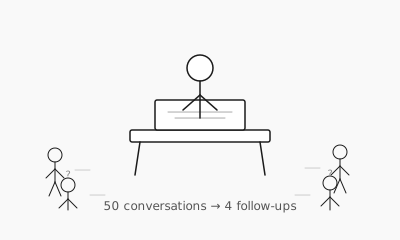
Then Tuesday arrives. The energy fades. The names in your phone have no context attached to them. You're not sure which one was genuinely interested versus which one was just being polite. And the longer you wait to reach out, the harder it gets — because the warm window is closing by the hour.
A Simple Follow-Up Workflow That Actually Runs
The best follow-up system is the one you'll actually use under real conditions — when you're tired, three other things are on your plate, and the event energy is gone. That means simple, specific, and fast.
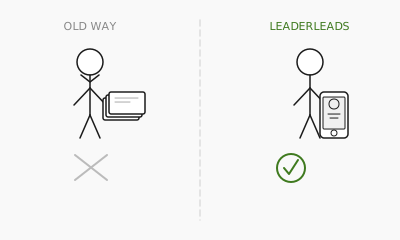
Step 1 — Capture during the event, not after. Use LeaderLeads Event Mode to get every contact into your lead inbox in real time. Don't rely on your memory or a notes app. The moment someone scans your QR, their info is in your list and you get an email alert. You never have to reconstruct who you met.
Step 2 — Sort on Sunday night, not Monday morning. Your lead inbox is time-stamped. Go through it while the event is still fresh. Put a mental star on the hot ones. Add a quick voice note to each contact while you still remember the conversation specifics.
Step 3 — Send the first follow-up within 24 hours. For your warmest leads, a personal note works best. Reference the Memory Moment photo if you captured one — "Loved connecting at Dallas last night. I still have the photo from Hall B!" gets a response rate that generic follow-ups can't touch.
Step 4 — Run the rest of the list over the following week. Everyone who scanned but wasn't a hot lead goes into a follow-up sequence. A week later, a light check-in. Two weeks later, a piece of useful content. Consistent, not pushy.
The Memory Moment Advantage in Follow-Up
Here's what separates LeaderLeads from every other tool. Memory Moment doesn't just help you remember them — it helps them remember you. When their phone shows an email Sunday night with a photo of the two of you at the event, time-stamped and location-tagged, you've already done half the follow-up work. You're not a stranger reaching out cold. You're the person in the photo.
"Tuesday's follow-up call is warm, not cold." That's not a tagline. That's what actually happens when the context is preserved from the moment of meeting.